Brakes are the most important safety system on your car. Unlike many mechanical faults that develop slowly and invisibly, brake problems almost always give you warning — if you know what to listen and feel for.
The mistake most drivers make is dismissing early warning signs or putting off a workshop visit because the car still stops. By then, a pad replacement has often become a pad-and-rotor replacement. Or worse.
Here are five warning signs that mean your brakes need attention.
1. Squealing or Squeaking When You Apply the Brakes
A high-pitched squeal when braking is the most common brake warning sign — and the most frequently ignored.
In most cases, consistent brake squealing means the wear indicator is doing its job. This is a small metal tab built into the brake pad that contacts the rotor surface when the pad material wears to a minimum safe thickness. The contact creates the squeal deliberately.
Exception: Some brake pads squeal when cold — particularly in humid conditions. If the noise disappears after the first few stops of the day and doesn’t return, that’s usually benign. If it’s present every time you brake, treat it as a warning.
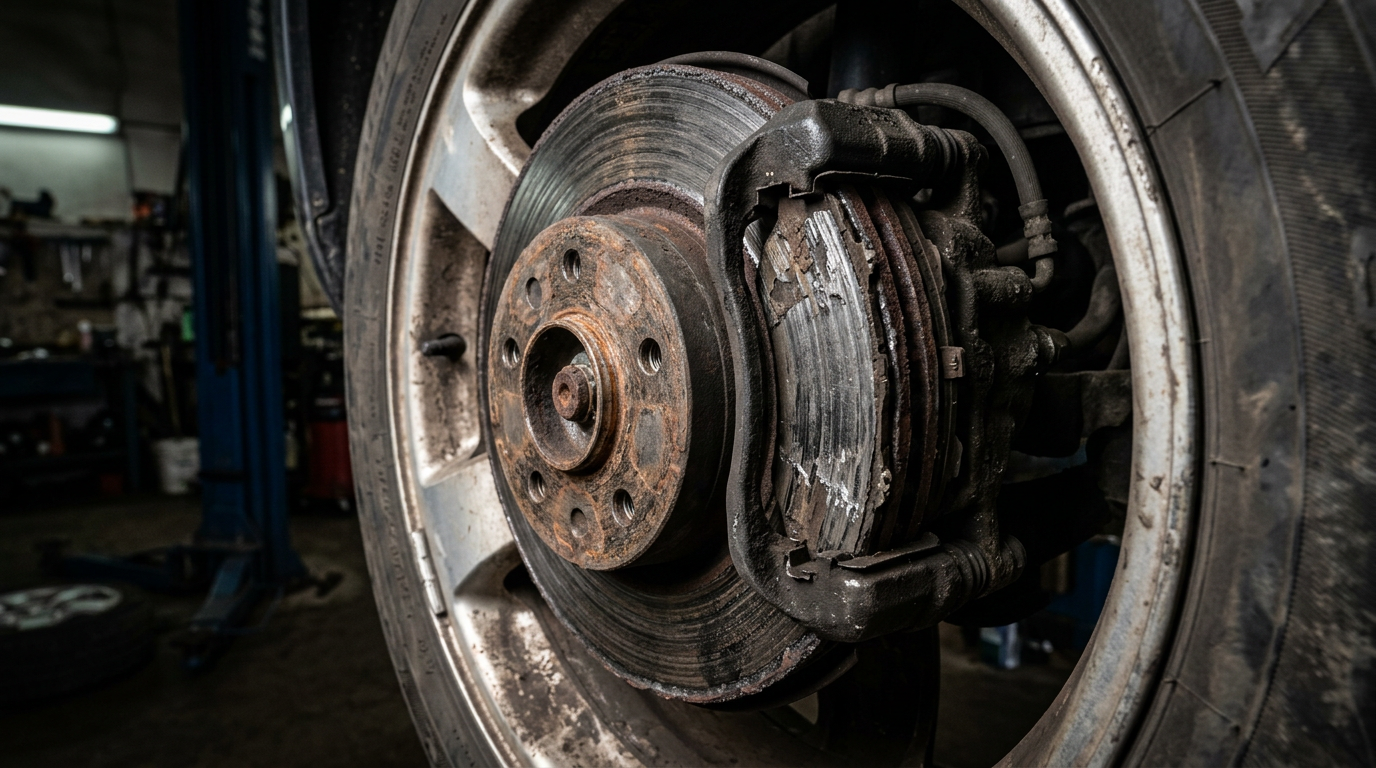
Worn pads that aren’t replaced will eventually wear through completely. Metal-on-metal contact damages the rotor rapidly, turning a pad replacement into a full brake job.
2. Grinding or Crunching During Braking
Grinding means the pad material has worn through entirely. You’re hearing metal contacting metal — usually the brake calliper bracket or pad backing plate against the rotor surface.
This damages rotors quickly. What started as a pad replacement at $200–$350 per axle can become a pad-and-rotor replacement at $400–$700 per axle in a matter of weeks.
If you hear grinding, increase your following distance to reduce braking demands, and book a workshop inspection as soon as possible. In some cases, the safety of continuing to drive is genuinely compromised.
3. The Car Pulls to One Side When You Brake
If your car pulls left or right when you apply the brakes — and the steering wheel moves without you turning it — you likely have uneven brake application between the left and right sides.
Common causes include:
- A sticking brake calliper on one side (applying more force than the other)
- Uneven brake pad wear from a seized calliper slide pin
- A collapsed flexible brake hose restricting fluid flow to one calliper
- Significantly different pad thickness between sides
A sticking calliper also causes brake drag — where one brake remains partially applied even when you’re not braking. This generates heat, wears components faster, and can reduce fuel economy noticeably.
4. A Soft or Spongy Brake Pedal
If the brake pedal feels mushy, travels further toward the floor than it used to, or feels inconsistent from one stop to the next, there’s likely a hydraulic system issue.
Possible causes include:
- Air in the brake lines — air compresses, fluid doesn’t; air in the system makes the pedal feel soft
- Low brake fluid — caused by a leak or by significantly worn pads (the calliper pistons extend further as pads wear, drawing fluid from the reservoir)
- Failing master cylinder — the component that pressurises the brake fluid when you press the pedal
- A leaking calliper or wheel cylinder — fluid escaping from the system
A soft pedal that progressively gets worse while you hold it down (the pedal slowly sinks to the floor) is a sign of a failing master cylinder. This is a safety issue — don’t delay.
Check your brake fluid reservoir. If it’s low, that’s a symptom worth investigating before topping it up and ignoring.
5. Vibration or Pulsation Through the Brake Pedal
Feeling a pulsing or shuddering sensation through the brake pedal — particularly when braking from higher speeds — usually means warped brake rotors.
Rotors warp when they’re subjected to intense heat and then rapid cooling, causing uneven expansion. Common scenarios include:
- Long descents without engine braking (repeated heavy braking overheating the rotors)
- Stopping hard repeatedly in traffic
- Applying the handbrake while the rotors are still hot after driving
Mildly warped rotors can sometimes be machined (resurfaced) to true them up — provided they’re still above the minimum thickness specification. Severely warped or thin rotors need replacement.
Vibration through the steering wheel during braking (rather than through the pedal) typically indicates a front brake issue.
When Should You Stop Driving and Call for Help?
Most brake symptoms warrant prompt attention but don’t require you to immediately pull over. However, these situations are genuine emergencies:
- Very little stopping power — the car isn’t decelerating properly even with firm pedal pressure
- Burning smell from a wheel area after normal driving — a seized calliper generating dangerous heat
- Brake warning light on, combined with a soft pedal
- Grinding accompanied by the vehicle pulling sharply and unpredictably
In any of these situations, find a safe place to stop. Don’t continue driving — the risk isn’t worth it.
Get Your Brakes Inspected in Mordialloc
BPS Automotive inspects brakes as part of every service, and offers standalone brake inspections for drivers who have a concern between services. We stock brake components for most common makes and models and can often turn around a repair same day.
Call 03 9588 2992 or contact us online to book. Don’t wait on brake problems — they only get worse.